How to Potty Train a Puppy: A Step-by-Step Guide That Works
A realistic schedule, the right gear and a calm approach to accidents: everything you need to house train your puppy quickly and kindly.

Key takeaways
- Most puppies learn the basics in 2 to 4 weeks and are fully reliable by 4 to 6 months.
- A puppy can usually hold it about one hour per month of age.
- Reward within seconds of success, outside, and never punish accidents.
- Supervise closely or use a crate to prevent mistakes.
Bringing home a puppy is one of life’s great joys, right up until you step in your first puddle on the kitchen floor. The good news is that house training is not a mystery. Puppies are born wanting to keep their sleeping area clean, and with a clear routine, lots of rewards and a little patience, most pups learn where to go within a few weeks. Full reliability usually takes a few months, and that is completely normal.
This guide walks you through everything you need: the gear, a realistic schedule, what to do when accidents happen, and how to handle special situations like apartments, night-time trips and stubborn puppies. Follow it consistently and you will be amazed how quickly your puppy catches on.
How Long Does Potty Training Take?
Most puppies grasp the basics in two to four weeks and become fully reliable somewhere between four and six months of age. Some small breeds take a little longer because their bladders are tiny and their accidents are easy to miss. Puppies adopted from environments where they had to soil their living space, such as some pet stores or crowded shelters, may also need extra time because their natural instinct to stay clean has been blunted.
A helpful rule of thumb is that a puppy can hold its bladder for roughly one hour per month of age, up to a maximum of about eight hours for an adult dog. That means a two-month-old puppy needs a bathroom break about every two hours during the day. Expecting more than that is setting your puppy up to fail.
| Puppy age | Approximate time between breaks (daytime) |
|---|---|
| 8 to 10 weeks | Every 1 to 2 hours |
| 3 months | Every 2 to 3 hours |
| 4 months | Every 3 to 4 hours |
| 5 to 6 months | Every 4 to 5 hours |
| Adult dog | Every 6 to 8 hours |
What You Need Before You Start
You do not need much, but having the right tools ready on day one makes the process smoother and far less stressful.
- A crate: Choose one just big enough for your puppy to stand up, turn around and lie down comfortably. Many crates come with a divider so you can make the space bigger as your puppy grows. Too much room lets a puppy use one end as a toilet.
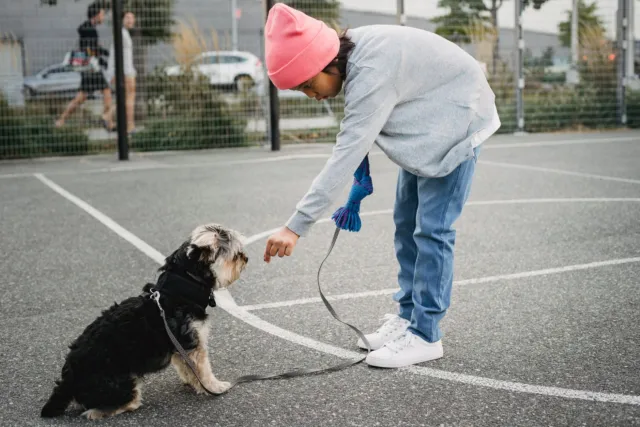
- A leash and flat collar or harness: Taking your puppy out on a leash keeps them focused on the task instead of wandering off to play.
- Small, tasty treats: Pea-sized soft treats work best. Keep a pouch by the door so you are never caught empty-handed.
- An enzymatic cleaner: Regular household cleaners do not remove the odor molecules that invite a puppy back to the same spot. Enzyme cleaners break those molecules down.
- Baby gates or a playpen: These limit your puppy’s access to the house so you can supervise closely.
- A notebook or phone app: Tracking when your puppy eats, drinks, sleeps and goes helps you spot patterns fast.
Step 1: Pick a Potty Spot
Choose one specific spot outdoors and take your puppy to it every single time. The lingering scent tells your puppy “this is the place,” and returning to the same area builds a strong habit. Ideally the spot is close to your door, because young puppies often cannot wait long, and a quick trip in the rain is easier when it is only a few steps away.
Walk to the spot calmly, stand still and let your puppy sniff. Avoid playing, chatting or wandering around until your puppy has done their business. You want this to feel like a boring, purposeful errand, with fun as the reward afterwards.
Step 2: Use a Cue Word
As your puppy starts to go, say a short, cheerful cue such as “go potty” or “be quick” in a calm voice. Over a few weeks your puppy will associate the phrase with the act, and eventually you can use it to prompt them on command. This is incredibly useful before car trips, bedtime or a visit to the vet.
Step 3: Reward Immediately
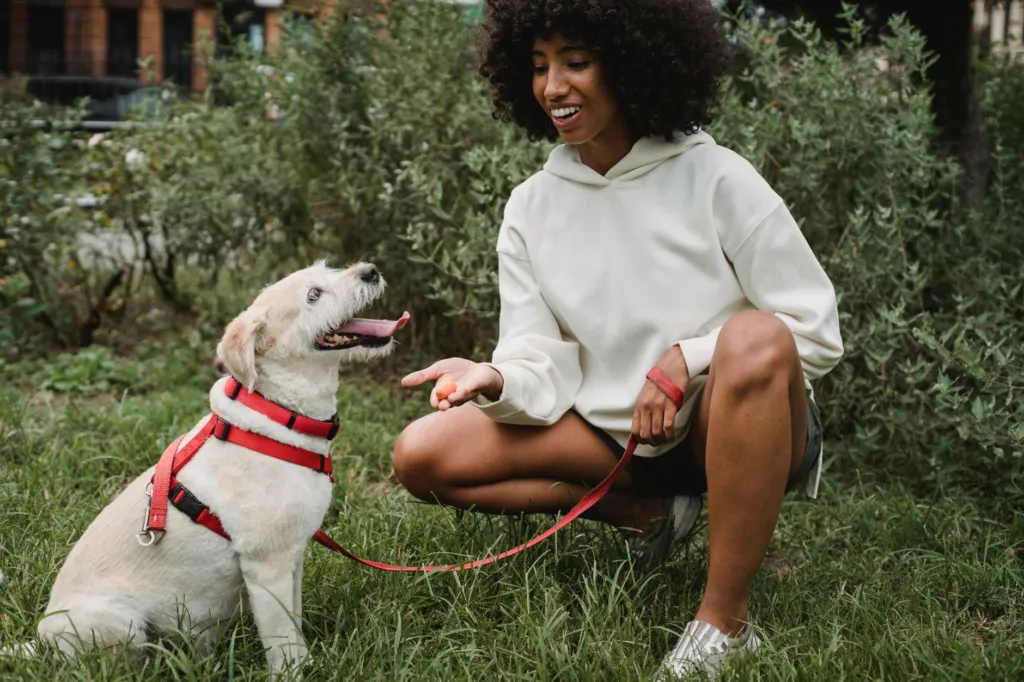
Timing is everything. Praise your puppy and hand over a treat within a second or two of them finishing, while you are still outside. If you wait until you are back indoors, your puppy will think they are being rewarded for walking through the door, not for peeing on the grass.
Be genuinely enthusiastic. A happy “Yes! Good puppy!” and a treat, followed by a few minutes of play or a short walk, teaches your puppy that going outside leads to wonderful things. Many trainers find that puppies who get play time only after they have gone learn to go faster.
Step 4: Follow a Consistent Schedule
Puppies thrive on routine. Feeding at the same times each day makes their bathroom needs predictable, which makes your job much easier. Free-feeding, where food is left out all day, makes it very hard to know when your puppy will need to go.
Take your puppy out at these key moments:
- First thing in the morning, before you do anything else.
- Within 10 to 15 minutes after every meal.
- Right after waking from a nap.
- During and after energetic play or chewing sessions.
- After drinking a good amount of water.
- Every one to two hours in between, depending on age.
- Last thing at night before bed.
A Sample Daily Schedule for a 10-Week-Old Puppy
- 6:30 am: Wake up and go straight outside.
- 7:00 am: Breakfast, followed by a potty trip 15 minutes later.
- 7:30 to 9:00 am: Supervised play and training, with a potty break halfway.
- 9:00 am: Nap in the crate. Potty break the moment they wake.
- 12:00 pm: Lunch, then outside.
- 12:30 to 2:30 pm: Play, short training sessions and another nap.
- 5:00 pm: Dinner, then outside.
- Evening: Potty breaks every hour or two while you relax together.
- 10:30 pm: Final trip out, then bed.
Step 5: Supervise, Supervise, Supervise
The secret of successful potty training is preventing accidents before they happen. Every time your puppy goes indoors, the habit of going indoors gets a little stronger. Every time they go outside and get rewarded, the right habit grows.
When your puppy is loose in the house, keep your eyes on them. Some owners attach the leash to their belt so the puppy stays within a few feet at all times, a technique often called umbilical training. When you cannot watch closely, even for a few minutes while you shower or cook, put your puppy in the crate or a puppy-proofed playpen.
Learn the Warning Signs
Puppies almost always give clues before they go. Watch for:
- Sudden sniffing at the floor, especially in circles
- Wandering off to a quiet corner or behind furniture
- Whining, pacing or seeming restless
- Stopping play abruptly
- Heading toward a spot where they had an accident before
- Going to the door or looking at you intently
The moment you see these signs, calmly scoop up your puppy or lead them outside to their spot.
Step 6: Use the Crate Wisely
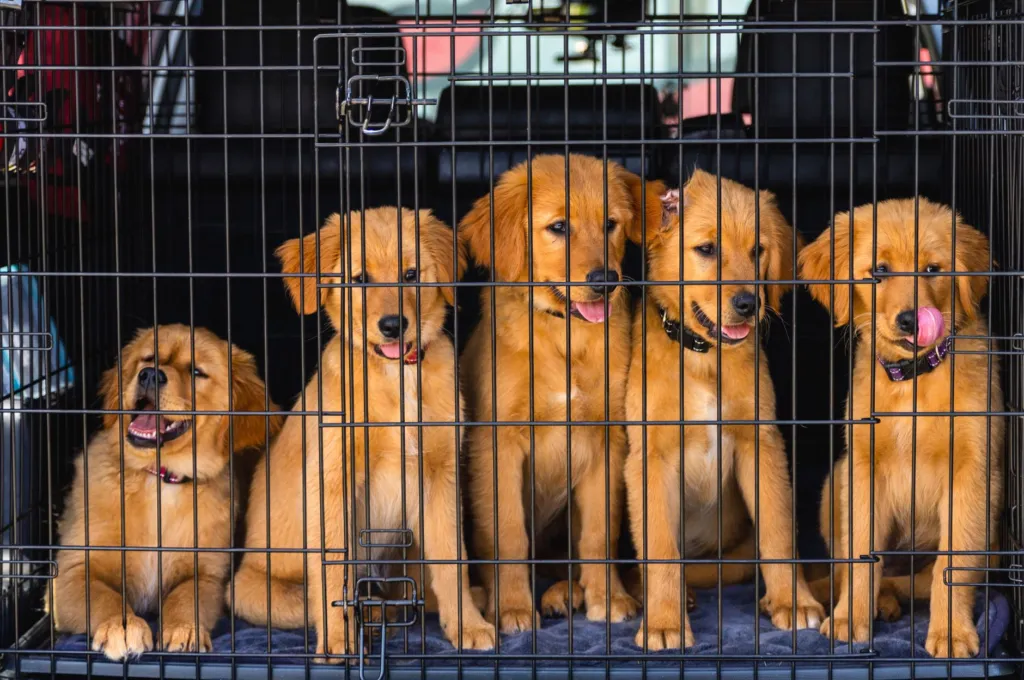
A crate is not a punishment. Introduced properly, it becomes your puppy’s den: a safe, cozy place to rest. Because dogs naturally avoid soiling where they sleep, the crate helps puppies learn bladder control.
Make the crate inviting with a comfortable bed, a safe chew toy and meals served inside. Start with short periods while you are home, gradually building up the time. Never leave a young puppy crated for longer than they can physically hold their bladder. If you work long hours, arrange for a friend, neighbor or dog walker to provide a midday break.
If your puppy repeatedly soils the crate, check that it is not too large, that they are not being left too long, and that bedding is not absorbing accidents in a way that makes them comfortable lying in mess. Persistent crate soiling can also indicate a medical problem, so mention it to your vet.
Step 7: Handle Accidents the Right Way
Accidents will happen. How you react makes a big difference.
- If you catch your puppy in the act: Calmly interrupt with a neutral sound like a quick clap or “oops,” then take them straight outside. If they finish outside, reward them.
- If you find an accident afterwards: Simply clean it up. Your puppy cannot connect a scolding with something they did minutes ago. Rubbing their nose in it or shouting only teaches them to fear you and to hide when they need to go, which makes training harder.
- Clean thoroughly: Blot up as much as possible, then saturate the area with an enzymatic cleaner and let it work as directed on the label.
- Reflect on what happened: Was it too long since the last break? Did you miss the signs? Adjust the schedule accordingly.
Night-Time Potty Training
Young puppies usually cannot make it through the night without a bathroom break. For the first few weeks, expect to get up once or twice.
Place the crate in or near your bedroom so you can hear your puppy stir. When they wake and whine, take them out on leash, keep the lights low and the interaction boring, reward quietly after they go, and head straight back to bed. No play, no big fuss. You want night trips to be all business so your puppy does not start waking you up just for company.
Pick up the water bowl about two hours before bedtime (unless your vet advises otherwise, or it is very hot) and schedule the last potty trip as late as practical. Most puppies can sleep through the night by around four months of age.
Potty Training in an Apartment
Living on the tenth floor adds a challenge, because the trip outside takes time. A few strategies help:
- Carry very young puppies to the exit so they do not have an accident in the hallway or elevator.
- Keep shoes, keys and a leash right by the door for quick exits.
- Consider a temporary indoor option such as a real-grass patch or litter box on a balcony, especially for small breeds or during extreme weather. If you use one, treat it exactly like the outdoor spot, with cue words and rewards.
- Be aware that puppy pads can confuse some dogs, because they teach that going indoors is acceptable. If you use pads, move them gradually toward the door and then outside.
Common Potty Training Problems and Fixes
My puppy pees right after coming back inside
This usually means you came in too soon or the outdoor spot is too distracting. Stay outside longer, stay boring, and reward the instant they go. Some puppies need to move a little to get things going, so a slow walk back and forth can help.
My puppy was doing well and suddenly regressed
Regression is common around four to six months, during teething, after a move or schedule change, or when owners relax supervision too quickly. Go back to basics for a week or two: more frequent trips, closer supervision, and generous rewards.
My puppy pees when excited or greeting people
Excitement or submissive urination is involuntary, not a training failure. Keep greetings low-key, avoid leaning over your puppy, and greet them outdoors where possible. Most puppies grow out of it as their bladder control matures.
My puppy has frequent accidents despite a good routine
Very frequent urination, straining, blood in the urine or sudden loss of house training can signal a urinary tract infection or other health issue. Book a vet check before assuming it is a behavior problem.
Should You Use Puppy Pads?
Puppy pads have pros and cons. They can be useful for tiny breeds, people with mobility limits, apartments without easy outdoor access, or puppies who are not yet fully vaccinated and should avoid public areas. However, they can teach your puppy that soft surfaces such as rugs and bath mats are acceptable toilets.
If your long-term goal is outdoor toileting, most trainers recommend going straight to outdoor training where possible. If you do use pads, keep them in one fixed location, reward your puppy for using them, and plan a gradual transition outdoors.
A Note on Vaccinations and Outdoor Areas
Until your puppy has completed their vaccination course, your vet may advise avoiding places where many unknown dogs go, such as busy parks and sidewalks, because of diseases like parvovirus. A private yard or a clean, low-traffic area is usually safer. Ask your vet what is appropriate for your area and your puppy’s vaccine schedule.
Potty Training Checklist
- Set up a crate, playpen and supplies before your puppy arrives.
- Choose one outdoor spot and always use it.
- Feed meals on a fixed schedule.
- Take your puppy out after waking, eating, drinking and playing.
- Reward within two seconds of success, outside.
- Supervise constantly or confine safely.
- Clean accidents with an enzymatic cleaner and never punish.
- Track progress and adjust the schedule as your puppy grows.
The Bottom Line
Potty training is really about building good habits and preventing bad ones. Keep a predictable schedule, watch your puppy closely, reward success generously and stay calm about the inevitable accidents. Every puppy learns at their own pace, but with consistency you will soon have a clean house and a confident, well-mannered dog. And if progress stalls or something seems off, your veterinarian or a certified positive-reinforcement trainer is always a great next step.
Was this article helpful?

The Mad4Pets editorial team is a group of lifelong pet owners and writers who turn trusted veterinary guidance into practical, easy-to-follow advice for everyday pet parents.