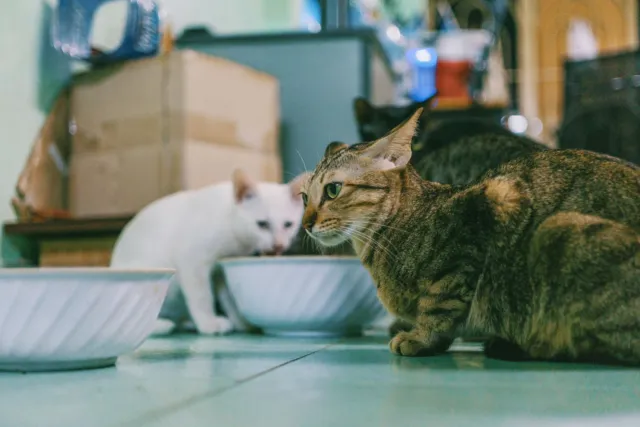
Wet vs Dry Cat Food: Which Is Better for Your Cat?
The pros and cons of wet and dry cat food, how much to feed, how to read a label and why many cats thrive on a combination.


Key takeaways
- Both wet and dry food can be healthy if labeled complete and balanced.
- Wet food boosts hydration and helps with weight control.
- Dry food is convenient and ideal for puzzle feeders, but easy to overfeed.
- Switch foods gradually over 7 to 10 days and never let a cat go without eating.
Walk down the cat food aisle and you will face a wall of options: pouches, cans, kibble, grain-free, high-protein, senior, indoor, hairball control and more. It is no wonder so many cat owners feel confused about what to feed. One of the most common questions is whether wet or dry food is better.
The short answer is that both can be healthy choices when they are complete and balanced, and many cats do well on a combination. The longer answer depends on your cat’s age, health, preferences and your budget. This guide explains what cats need nutritionally, the pros and cons of each type of food, how much to feed, and how to read a label with confidence.
What Cats Need: The Basics of Feline Nutrition
Cats are obligate carnivores. That means their bodies are designed to get nutrients from animal tissue, and they have some very specific requirements that differ from dogs and people.
- High-quality animal protein: Cats use protein not just for building muscle but also as a major energy source. They need more protein than many other animals.
- Taurine: An amino acid essential for heart function, vision and reproduction. Cats cannot make enough of it themselves, and a deficiency can cause serious heart disease and blindness. All complete commercial cat foods include it.
- Arachidonic acid: A fatty acid cats must get from their diet.
- Preformed vitamin A: Cats cannot convert beta-carotene from plants into vitamin A as we can.
- Water: Cats evolved from desert-dwelling ancestors that got much of their moisture from prey. Many cats have a relatively weak thirst drive, which is one reason moisture in the diet matters.
Cats also need a careful balance of minerals, vitamins and fats. This is why homemade diets are risky unless formulated by a board-certified veterinary nutritionist.

Wet Cat Food: Pros and Cons
Wet food comes in cans, pouches and trays, in textures like pâté, chunks in gravy, shreds and mousse. It typically contains around 70 to 80 percent moisture.
Advantages of Wet Food
- Hydration: The high water content helps increase total water intake, which may support urinary tract and kidney health. Vets often recommend wet food for cats prone to urinary problems or bladder stones.
- Weight management: Wet food is less calorie-dense per bite, so cats can eat a satisfying volume for fewer calories.
- Palatability: Most cats love the taste and smell of wet food, which is helpful for picky eaters, senior cats and cats recovering from illness.
- Easier to eat: Softer texture suits cats with dental problems or missing teeth.
- Often lower in carbohydrates: Many wet foods have fewer carbohydrates than dry kibble, which may be helpful for some cats, including those with diabetes, under veterinary guidance.
Disadvantages of Wet Food
- Cost: Wet food is usually more expensive per calorie than dry food.
- Short bowl life: It should not sit out for more than about 30 minutes to an hour at room temperature, and less in hot weather. Opened cans must be covered and refrigerated.
- Convenience: It requires scheduled meals and more cleanup, which can be tricky for busy owners.
- Packaging waste: Cans and pouches produce more waste, although many are recyclable.
Dry Cat Food: Pros and Cons
Dry food, or kibble, typically contains around 6 to 10 percent moisture. It is the most popular type of cat food in many countries because of its convenience and value.
Advantages of Dry Food
- Convenience: Easy to store, measure and serve, and it can be left out longer without spoiling.
- Cost-effective: Usually cheaper per calorie than wet food.
- Great for enrichment: Kibble works well in puzzle feeders and treat balls, which encourage natural foraging behavior and slow down fast eaters.
- Specialized dental diets: Some specially designed dental kibbles can help reduce plaque and tartar. Look for products accepted by the Veterinary Oral Health Council (VOHC). Regular kibble does not clean teeth in any meaningful way.
Disadvantages of Dry Food
- Low moisture: Cats eating only dry food drink more water, but their total water intake is often still lower than cats eating wet food.
- Calorie dense: It is easy to overfeed, especially if food is left out all day. Obesity is one of the most common health problems in pet cats.
- Higher in carbohydrates: Kibble needs starch to hold its shape, so it is generally higher in carbohydrates than wet food.
Wet vs Dry at a Glance
| Wet food | Dry food | |
|---|---|---|
| Moisture | About 70 to 80% | About 6 to 10% |
| Calories per bite | Lower | Higher |
| Cost per calorie | Higher | Lower |
| Shelf life once served | Short | Longer |
| Best for | Hydration, urinary health, weight control, picky eaters | Convenience, puzzle feeders, budget |
The Case for Combination Feeding
Many vets suggest a mix of wet and dry food, which gives you the hydration and palatability of wet food along with the convenience and enrichment options of dry. A common approach is to feed wet food for one or two meals a day and offer a measured portion of kibble in a puzzle feeder for the rest.
Feeding both textures from a young age can also make life easier later. Cats often form strong food preferences early in life, and a cat who only accepts one texture can be difficult to switch if a medical diet is ever needed.

How Much Should You Feed Your Cat?
The right amount depends on your cat’s age, size, activity level, whether they are neutered, and the calorie content of the food. An average, healthy, indoor adult cat weighing around 4 to 5 kilograms (9 to 11 pounds) often needs roughly 200 to 250 kilocalories per day, but individual needs vary considerably.
- Start with the feeding guidelines on the package, which are based on weight.
- Check the calorie content, listed as kcal per can, pouch or cup, and include treats in your daily total. Treats should make up no more than about 10 percent of daily calories.
- Measure dry food with a kitchen scale or measuring cup rather than eyeballing it.
- Monitor your cat’s body condition every few weeks and adjust portions up or down.
You can estimate daily calorie needs with our pet food calculator, then fine-tune with your vet.
Is Your Cat at a Healthy Weight?
Run your hands along your cat’s sides. You should be able to feel the ribs easily without pressing hard, and see a slight waist behind the ribs when looking from above. A hanging belly pouch is normal in many cats and is not the same as fat, but a round shape with ribs you cannot feel suggests your cat is overweight.
Free Feeding vs Scheduled Meals
Free feeding means leaving food out all day. It is convenient but can lead to overeating, makes it hard to notice changes in appetite, and does not work well in multi-cat homes where one cat may eat more than their share.
Scheduled meals, typically two to four small meals a day, make it easier to control portions and monitor your cat’s appetite. Cats in the wild eat many small meals a day, so dividing the daily amount into several portions, or using timed feeders and puzzle toys, suits their natural behavior well.
How to Read a Cat Food Label
Labels can be confusing, but a few key sections tell you most of what you need to know.
- Nutritional adequacy statement: The most important line. Look for wording stating that the food is “complete and balanced” for your cat’s life stage, based on standards from organizations such as AAFCO in the United States or FEDIAF in Europe. Foods labeled “complementary” or “for intermittent or supplemental feeding” are treats or toppers, not complete diets.
- Life stage: Growth (kittens), adult maintenance, or all life stages.
- Ingredient list: Ingredients are listed by weight before cooking. Meat listed first is common in wet foods because of its water content, so do not rely on ingredient order alone.
- Guaranteed analysis: Lists minimum protein and fat and maximum fiber and moisture. To compare wet and dry foods fairly, you need to convert values to a dry matter basis.
- Calorie statement: Tells you kcal per kilogram and per can or cup, which is essential for accurate portioning.
What About Grain-Free and Raw Diets?
Grain-Free
Grain-free diets are popular, but there is little evidence that grains are harmful to most cats. True food allergies in cats are relatively uncommon and are more often caused by animal proteins such as beef, fish or chicken than by grains. Grain-free foods may replace grains with other carbohydrates like potatoes or peas, so they are not necessarily lower in carbohydrates.
Raw Diets
Raw feeding has passionate supporters, but major veterinary organizations raise concerns about bacterial contamination, such as Salmonella and Listeria, which can affect both cats and the people handling the food, as well as the risk of nutritional imbalances in homemade raw diets. If you are considering raw feeding, discuss it with your vet and choose commercially prepared, complete and balanced products with strict safety controls.
Special Considerations
Kittens
Kittens need a food formulated for growth, fed in several small meals a day. Wet food is great for hydration and many kittens enjoy both textures.
Senior Cats
Older cats may need more easily digestible protein, adjustments for kidney or thyroid conditions, and softer textures if they have dental issues. Some seniors lose weight and need more calories rather than fewer. Regular vet check-ups, ideally every six months, help catch changes early.
Cats With Health Conditions
Cats with urinary disease, kidney disease, diabetes, food allergies or gastrointestinal problems may need a prescription diet. Always follow your vet’s recommendations and do not switch away from a therapeutic diet without advice.

How to Switch Your Cat’s Food
Sudden diet changes can cause vomiting, diarrhea or food refusal. Transition gradually over 7 to 10 days:
- Days 1 to 3: 25 percent new food, 75 percent old food
- Days 4 to 6: 50 percent new, 50 percent old
- Days 7 to 9: 75 percent new, 25 percent old
- Day 10: 100 percent new food
Some cats need an even slower switch. Never starve a cat into accepting a new food. Cats that stop eating for more than a day or two are at risk of a serious liver condition called hepatic lipidosis.
Tips to Help Your Cat Drink More Water
- Include wet food in the diet, or add a little warm water to wet food.
- Offer several water bowls around the house, away from food and litter.
- Use wide, shallow bowls so whiskers do not touch the sides.
- Try a pet water fountain; many cats prefer moving water.
- Keep bowls clean and refresh water daily.
Frequently Asked Questions
Is dry food bad for cats?
No. Complete and balanced dry food can be part of a healthy diet. The main concerns are lower moisture and the ease of overfeeding, which you can manage with measured portions, extra water sources and some wet food.
Can I feed my cat dog food?
No. Dog food does not contain enough protein, taurine or other nutrients cats need. An occasional stolen bite is not dangerous, but a cat fed dog food long term can develop serious deficiencies.
Should I feed fish-flavored food every day?
Fish is fine as part of a complete and balanced diet, but many owners rotate proteins. Some cats become fixated on fish flavors, which can make it harder to change foods later.
How often should adult cats eat?
At least twice a day, and many cats do better with three or four smaller meals or the use of puzzle feeders spread throughout the day.
The Bottom Line
Both wet and dry food can nourish your cat well when they are complete and balanced for the right life stage. Wet food offers valuable hydration and helps with weight control, while dry food is convenient and great for enrichment. For many cats, a thoughtful combination offers the best of both. Measure portions, monitor weight, encourage drinking and involve your vet in decisions, especially if your cat has health issues.
Was this article helpful?

The Mad4Pets editorial team is a group of lifelong pet owners and writers who turn trusted veterinary guidance into practical, easy-to-follow advice for everyday pet parents.