Guinea Pig Care Guide: Housing, Diet and Daily Care
Everything you need to know about keeping guinea pigs: space, hay, daily vitamin C, companionship, handling and health.


Key takeaways
- Guinea pigs are herd animals and should live in pairs or groups.
- They need vitamin C every day to prevent scurvy.
- Unlimited grass hay should make up most of the diet.
- Most store cages are too small; aim for about 1 square meter for two.
Guinea pigs, also called cavies, are gentle, chatty and full of character. They greet their favorite people with excited squeaks, leap into the air when happy, and communicate with an impressive range of sounds. They are also robust enough to be handled gently, which makes them popular with families.
But guinea pigs have specific needs that are easy to get wrong. They must have vitamin C in their diet every day, they need company of their own kind, and they require far more space than most pet store cages provide. With the right care, guinea pigs typically live around 5 to 8 years. This guide explains everything you need to know.
Guinea Pig Quick Facts
- Origin: The Andes region of South America, where they were domesticated thousands of years ago.
- Adult size: About 20 to 25 cm long, weighing roughly 700 to 1,200 grams.
- Lifespan: Typically 5 to 8 years.
- Activity: Active at intervals throughout the day and night, with short naps.
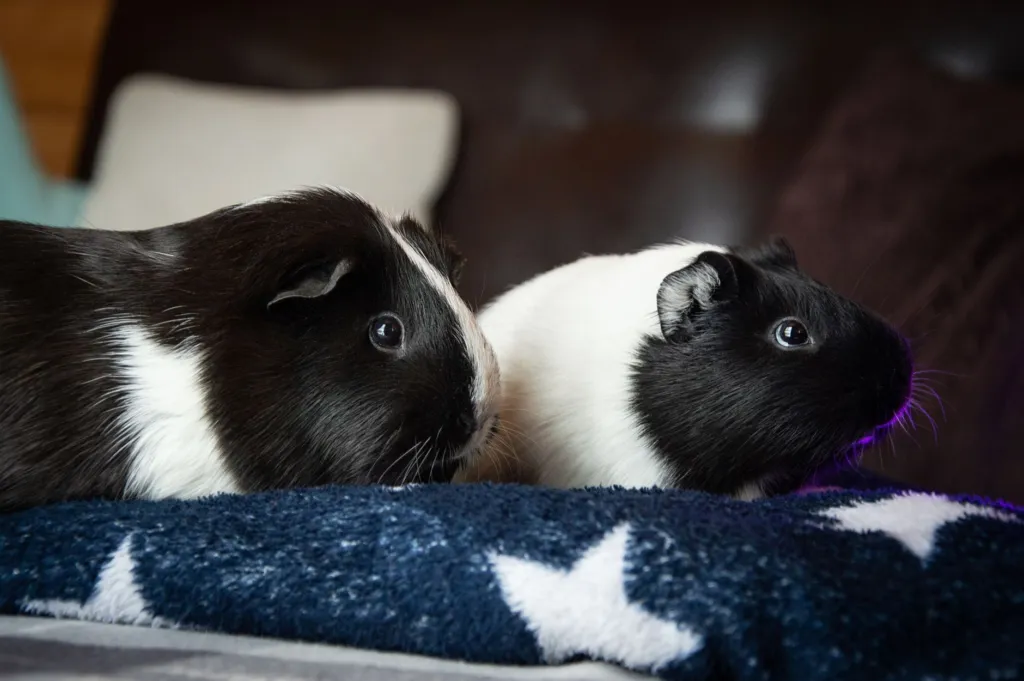
- Social needs: Very social; should live with at least one other guinea pig.
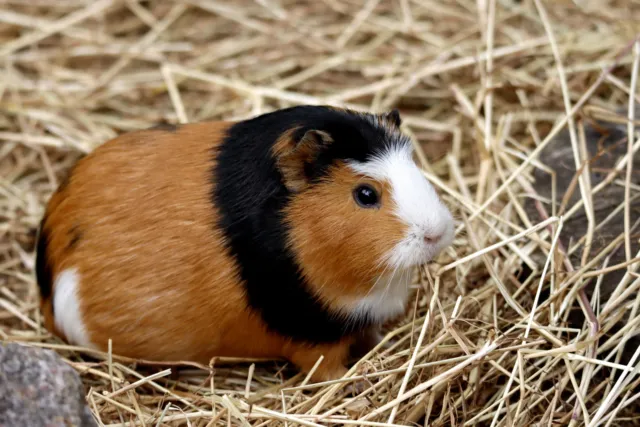
- Breeds: Include short-haired American, rosette-coated Abyssinian, long-haired Peruvian and Silkie, curly Teddy and Texel, and almost hairless Skinny pigs.

Guinea Pigs Need Friends
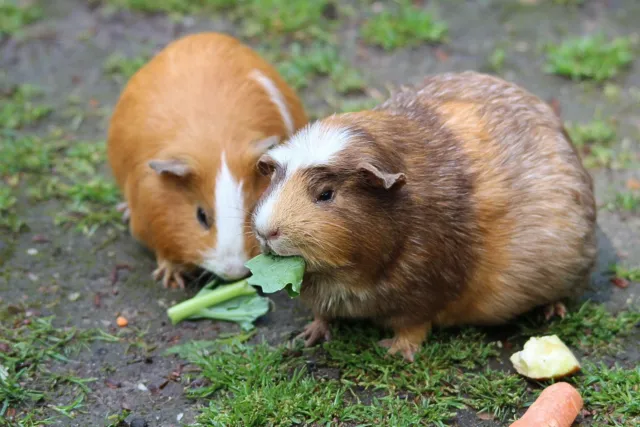
Guinea pigs are herd animals. Living alone can cause loneliness and stress, and in some countries, such as Switzerland, it is actually illegal to keep a single guinea pig. Keep at least two together.
Good pairings include two females (sows), two neutered or unneutered males (boars) introduced carefully, or a neutered male with one or more females. Two boars can live happily together, especially if introduced young and given plenty of space, but they may squabble during adolescence. Rescues can often help you find a compatible friend for a single guinea pig.
As with rabbits, guinea pigs should not be housed with rabbits, which have different needs and can injure them.
Housing: Give Them Room to Roam
Most commercial guinea pig cages are far too small. Guinea pigs need space to run, explore and “popcorn,” the adorable jumping behavior they do when happy.
- Minimum size: Many welfare guidelines suggest at least about 0.7 square meters (7.5 square feet) for a pair, with more being much better. Around 1 square meter (10.5 square feet) or larger is ideal for two, with more space for each additional pig.
- Cage type: Many owners use C&C cages (cubes and coroplast), which are modular, affordable and easy to expand.
- Flooring: Solid floors only. Wire floors can cause painful foot injuries.
- Bedding: Paper-based bedding, aspen shavings or washable fleece liners with an absorbent layer underneath. Avoid cedar and pine shavings, which release aromatic oils that can irritate the respiratory tract.
- Hideys: Provide at least one hiding place per guinea pig, plus tunnels. As prey animals, they need to feel safe.
- Location: Indoors in a room with a stable temperature of roughly 18 to 24°C (65 to 75°F), away from drafts, direct sunlight and loud noises. Guinea pigs are very sensitive to heat and can suffer heatstroke above about 27°C (80°F).
If guinea pigs live outdoors in suitable climates, they need a large, secure, weatherproof hutch and run protected from predators, rain, cold and heat, and many owners bring them indoors in winter.
Diet: Hay, Vegetables and Vitamin C
Hay
Like rabbits, guinea pigs need unlimited, fresh grass hay such as timothy, orchard or meadow hay. Hay should make up the majority of their diet. It provides the fiber needed for healthy digestion and wears down their continuously growing teeth. Alfalfa hay is higher in calcium and protein and is generally reserved for young, pregnant or underweight guinea pigs.
Vitamin C: Non-Negotiable
Guinea pigs, like humans, cannot make their own vitamin C. Without enough in their diet, they develop scurvy, which causes lethargy, swollen joints, reluctance to move, rough coat, bleeding gums, poor wound healing and weight loss. Most adult guinea pigs need about 10 to 30 milligrams per day, with more during pregnancy or illness.
Provide vitamin C through:
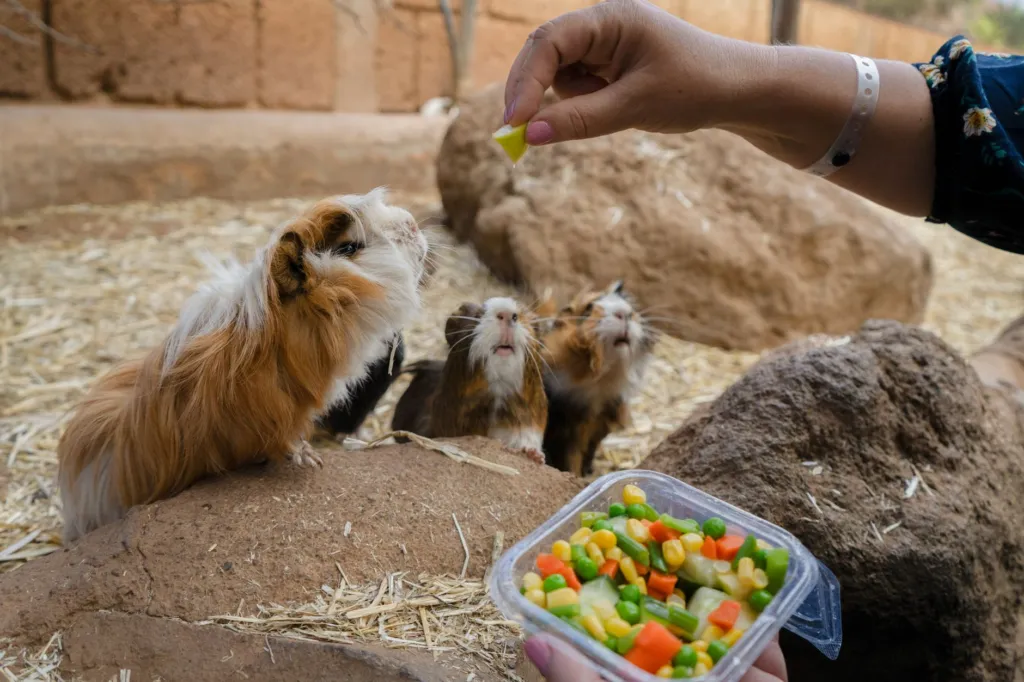
- Fresh vegetables rich in vitamin C, such as bell peppers (especially red and yellow), kale, parsley, broccoli and romaine lettuce.
- Quality guinea pig pellets fortified with stabilized vitamin C. Check the expiration date, as vitamin C degrades over time.
- Vet-recommended supplements if needed. Avoid adding vitamin C drops to water, as it degrades quickly and may discourage drinking.
Fresh Vegetables
Offer about one cup of fresh vegetables per guinea pig daily, focusing on leafy greens and vitamin C-rich foods. Introduce new vegetables slowly. Feed high-calcium greens like kale and spinach in moderation to reduce the risk of bladder stones.
Pellets
Provide a small portion, often about 1/8 cup per guinea pig per day, of plain, high-fiber pellets made specifically for guinea pigs. Avoid mixes with seeds, nuts, colored pieces and dried fruit.
Treats and Foods to Avoid
Small amounts of fruit such as apple, strawberry, blueberries or orange are fine as occasional treats. Never feed chocolate, onions, garlic, potatoes, avocado, iceberg lettuce, dairy, meat, bread, seeds or nuts.
Water
Fresh, clean water must always be available, in a sipper bottle, a heavy ceramic bowl, or both. Check bottles daily to ensure they are working and clean them regularly to prevent algae and bacteria.
Handling and Bonding
Guinea pigs are often a little shy at first. Give new guinea pigs a few days to settle before handling. Then:
- Sit near the enclosure and talk softly so they learn your voice.
- Offer vegetables from your hand.
- When picking up, place one hand under the chest behind the front legs and the other under the hindquarters, lifting smoothly and holding them close.
- Sit on the floor or hold them in your lap with a towel, so a sudden wriggle does not lead to a fall.
- Keep sessions short at first and gradually increase them.
Children should always be supervised and taught to hold guinea pigs while sitting down. Falls from even a small height can cause serious injuries.
Understanding Guinea Pig Sounds
Guinea pigs are among the most vocal small pets, and learning their sounds is part of the fun.
- Wheeking: A loud, high-pitched whistle, often when they hear the fridge door or a food bag. Excitement and anticipation.
- Purring: A deep, relaxed purr indicates contentment. A higher, short purr can signal annoyance, and a vibrating “rumble strut” is courtship or dominance behavior.
- Chutting: Soft clucking sounds while exploring. A happy, curious guinea pig.
- Chattering teeth: A warning sign of agitation or aggression.
- Squealing: Pain, fear or distress.
- Popcorning: Not a sound, but happy jumps into the air, especially common in young guinea pigs.
Exercise and Enrichment
Guinea pigs need daily exercise beyond their cage. Provide supervised floor time in a safe, guinea pig-proofed area or a large playpen for at least an hour a day. Enrichment ideas include:
- Tunnels and cardboard boxes with holes cut out
- Hay racks and hay piles to forage through
- Scattered vegetables and herbs to encourage foraging
- Fleece forests: strips of fleece hung from a frame for hiding
- Safe chew toys made from untreated wood, willow or cardboard
- Rearranging hideys and tunnels to create new layouts
Exercise wheels and balls are not suitable for guinea pigs and can cause back injuries.
Grooming and Hygiene
- Brushing: Short-haired guinea pigs need occasional brushing; long-haired breeds need daily grooming and regular trims to prevent matting and soiling.
- Nails: Trim every four to six weeks. Use small animal nail clippers and avoid the quick.
- Teeth: Check that front teeth are even and not overgrown. Unlimited hay usually keeps them trim.
- Bathing: Rarely needed. Spot-clean if necessary and dry thoroughly.
- Boar cleaning: Older males may need their perineal sac cleaned occasionally to prevent impaction. Your vet can show you how.
Cleaning Routine
- Daily: Remove uneaten fresh food, spot-clean soiled bedding, refill hay and water.
- Every few days: Change fleece liners or replace soiled bedding areas.
- Weekly: Full clean of the enclosure, wash bowls and bottles, and launder fleece.
Common Health Problems
- Respiratory infections: Signs include sneezing, discharge from eyes or nose, noisy breathing and lethargy. These can be serious and need prompt treatment.
- Scurvy: Caused by vitamin C deficiency.
- Dental disease: Overgrown teeth cause drooling, weight loss and difficulty eating.
- Bladder stones: Signs include straining, squeaking when urinating and blood in urine.
- Skin problems: Mites and fungal infections cause itching, hair loss and scabs.
- Bumblefoot: Sores on the feet, often caused by wire floors, dirty bedding or obesity.
- Gastrointestinal stasis: Reduced eating and droppings is an emergency.
Find a vet experienced with guinea pigs and schedule annual check-ups.
Introducing New Guinea Pigs
Whether you are adding a friend for a single guinea pig or bringing two strangers together, introductions should be done carefully. Guinea pigs establish a hierarchy, and some mild squabbling is normal while they sort it out.
- Quarantine first: Keep a new guinea pig in a separate room for about two to three weeks to watch for signs of illness before introductions.
- Swap scents: Exchange hideys or fleece between enclosures so each pig gets used to the other’s smell.
- Meet on neutral ground: Choose a space neither guinea pig has claimed, such as a clean playpen in a different room.
- Provide distractions: Scatter plenty of hay and vegetables and include several open-ended tunnels, so no one feels trapped.
- Watch body language: Rumbling, chasing, mounting and nose-raising contests are normal dominance behaviors. Teeth chattering with raised hackles, lunging and biting that draws blood mean you should separate them using a towel or a piece of cardboard, never your bare hands.
- Move in together: Once they eat side by side calmly, move them into a thoroughly cleaned enclosure with duplicate hideys, bowls and hay racks.
Most introductions succeed with patience. If a pair repeatedly fights, a rescue with experience in bonding may be able to help find a better match.
Caring for Senior Guinea Pigs
From around four or five years of age, guinea pigs may slow down. Watch their weight closely, as older pigs can lose condition quickly. Offer softer, easy-to-eat foods if their teeth are sensitive, lower ramps or remove levels in the cage, and provide extra soft bedding for aging joints. More frequent vet checks help catch problems like arthritis, dental disease and tumors early, so your older companion stays comfortable.
Preparing for Your Guinea Pigs: A Shopping List
- Large cage or C&C setup with solid floor
- Safe bedding or fleece liners
- Hideys and tunnels (one per pig, plus extra)
- Hay rack and a large supply of grass hay
- Guinea pig pellets with stabilized vitamin C
- Heavy food bowls and a water bottle or bowl
- Nail clippers and a soft brush
- Kitchen scale for weekly weigh-ins
- A carrier for vet visits
- Playpen for floor time
Guinea Pigs and Children
Guinea pigs can be wonderful family pets because they are gentle, rarely bite, and are awake during the day. Still, they are living animals with long lifespans and specific needs, not toys. An adult should always take ultimate responsibility for their care. Teach children to sit on the floor while holding a guinea pig, to use two hands, to speak quietly and to return the pig to its enclosure if it starts to wriggle. Involving kids in chopping vegetables, refilling hay and weighing the pigs is a great way to build responsibility and empathy.
Frequently Asked Questions
Do guinea pigs smell?
Guinea pigs themselves have little odor. Smells usually come from dirty bedding. Daily spot-cleaning and regular full cleans keep things fresh.
Can guinea pigs live outside?
In mild climates, guinea pigs can live outdoors in a secure, sheltered setup, but they are very sensitive to heat, cold and damp. Many owners keep them indoors for safety and more social interaction.
Why is my guinea pig popcorning?
Popcorning is a sign of happiness and excitement. It is most common in young guinea pigs but adults do it too.
How much time do guinea pigs need each day?
Plan for about 30 to 60 minutes of care and interaction daily, plus floor time for exercise.
The Bottom Line
Guinea pigs are sociable, expressive and affectionate pets that thrive with the right care. Keep them in pairs or groups, give them spacious housing, unlimited hay, fresh vegetables and daily vitamin C, and watch them closely for signs of illness. Do that, and you will enjoy years of wheeks, purrs and joyful popcorning.
Was this article helpful?

The Mad4Pets editorial team is a group of lifelong pet owners and writers who turn trusted veterinary guidance into practical, easy-to-follow advice for everyday pet parents.