Cat Body Language Decoded: What Your Cat Is Trying to Tell You
Tails, ears, eyes and whiskers: learn to read your cat's subtle signals, from slow blinks and kneading to the warning signs before a swat.

Key takeaways
- A tail held straight up is a friendly greeting; a lashing tail means irritation.
- Slow blinks signal trust, and you can blink back.
- A belly-up cat is showing trust, not asking for a belly rub.
- Cats hide pain, so subtle behavior changes deserve a vet check.
Cats have a reputation for being mysterious, but they are actually communicating all the time. The trouble is that their language is subtle. A twitch of the tail tip, a slow blink or ears rotated a few degrees can carry a lot of meaning. Once you learn to read these signals, your cat suddenly becomes far easier to understand, and far easier to live with.
This guide decodes the most important parts of cat body language: tail, ears, eyes, whiskers, posture and vocal sounds. We also explain common behaviors like kneading, head bunting and belly exposure, and how to tell when your cat wants affection, space or help.
Why Understanding Cat Body Language Matters
Many bites and scratches happen because people miss a cat’s warning signs. Cats rarely go from content to swatting without warning; they usually send several increasingly clear signals first. Learning to read them helps you:
- Know when your cat wants to be petted and when to stop
- Spot stress early and adjust the environment
- Notice pain or illness, which cats are experts at hiding
- Build a trusting relationship based on respect
- Introduce cats to other pets and people more safely
The Tail: A Mood Barometer
A cat’s tail is one of the most expressive parts of its body. Here are the key positions to recognize.
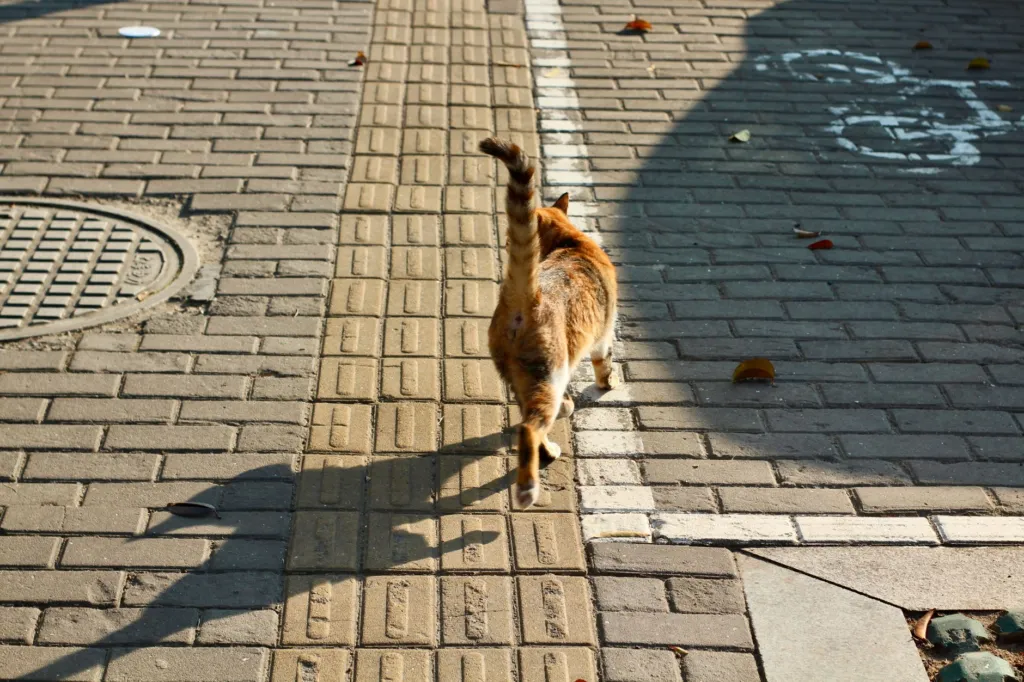
- Tail straight up, often with a slight hook at the tip: A friendly greeting. Cats approach each other and their favorite people this way. It is one of the clearest signs of a happy, confident cat.
- Tail relaxed and low or held out behind: Neutral and calm.
- Tail wrapped around the body while sitting or lying: Usually relaxed, although it can also indicate a cat is feeling a little reserved.
- Tail tip twitching: Interest, focus or mild irritation. You will see it when a cat watches birds, and also when they are starting to get annoyed with petting.
- Tail swishing or thumping side to side: Growing agitation or overstimulation. Unlike dogs, a cat lashing its tail is rarely happy. Time to give space.
- Puffed up “bottle brush” tail: Fear or feeling threatened. The cat is trying to look bigger.
- Tail tucked under the body: Fear, anxiety or submission.
- Tail wrapped around your leg or another cat: Affection and social bonding.
The Ears: Radar Dishes
Cats have more than 30 muscles in each ear, allowing them to swivel independently. Ear position changes quickly and is a great real-time indicator of mood.
- Forward and upright: Relaxed, alert or interested.
- Swiveling around: Listening and gathering information about the environment.
- Turned sideways or slightly back (“airplane ears”): Irritation, uncertainty or growing anxiety.
- Flattened back against the head: Fear or defensive aggression. A cat with flat ears is saying “back off.”
The Eyes: Windows to the Feline Mind
Eyes reveal a lot, although pupil size also changes with light levels, so always consider the lighting before drawing conclusions.
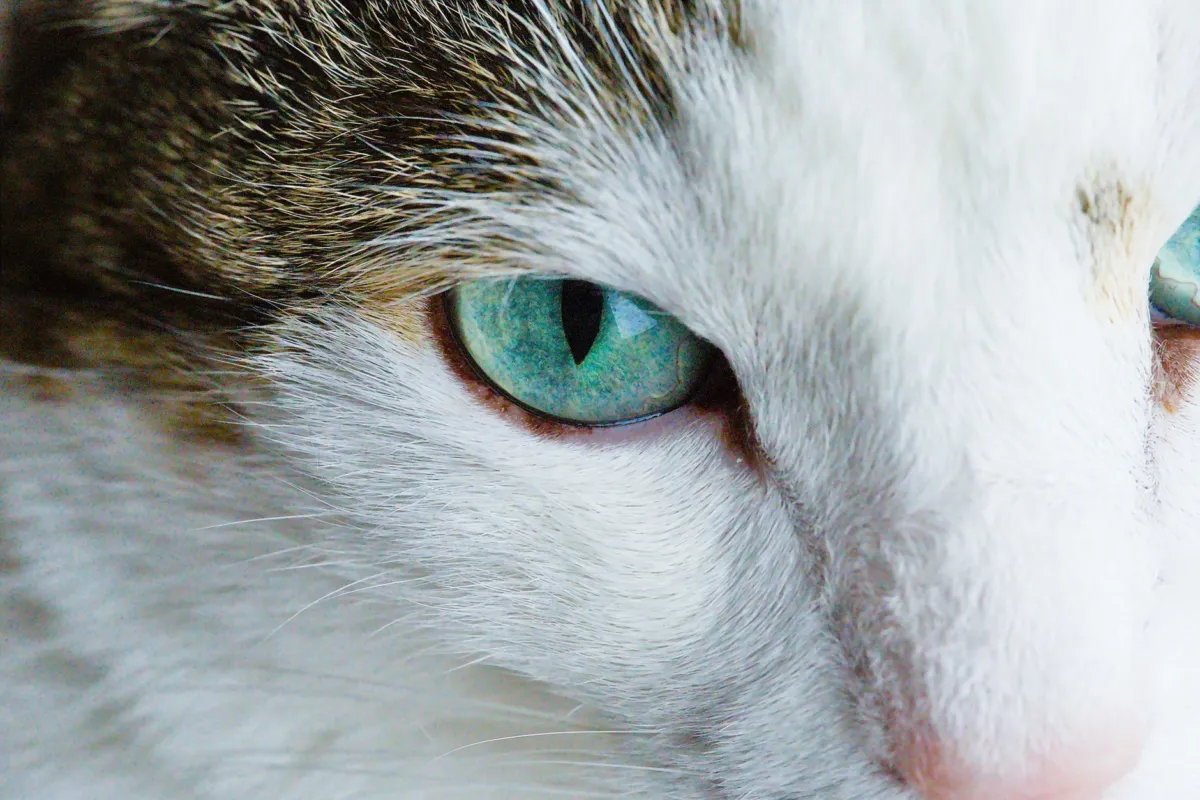
- Slow blink: Often called a “cat kiss.” A slow, relaxed blink signals trust and contentment. Research has found that cats are more likely to approach people who slow-blink at them, so try blinking slowly back.
- Half-closed, droopy eyes: Relaxed and sleepy.
- Wide eyes with dilated pupils: Excitement, surprise, fear or playful arousal. Context tells you which.
- Constricted, slit pupils in normal light: Can indicate focus or rising tension, especially combined with a stiff body.
- Hard, unblinking stare: A challenge or threat, commonly seen between cats in conflict.
- Averted gaze: A polite way of avoiding confrontation.
Whiskers: Subtle but Telling
Whiskers are sensitive touch receptors, but their position also reflects emotion.
- Relaxed and slightly out to the sides: Calm.
- Pushed forward: Curious, interested or hunting. Cats also push whiskers forward to sense prey at close range.
- Pulled back flat against the face: Fear or defensiveness.
Posture and Body Position
Relaxed Cat
A relaxed cat may lie stretched out on its side, curl up loosely, or sit with a soft posture. Their muscles look loose and their breathing is slow and even.
The Loaf
When a cat tucks all four paws underneath and sits like a loaf of bread, they are usually calm but alert enough to get up quickly if needed. It is a comfortable, content position for most cats.
Belly Up
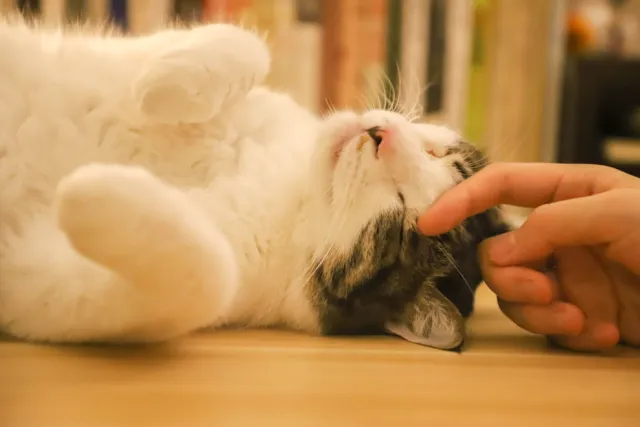
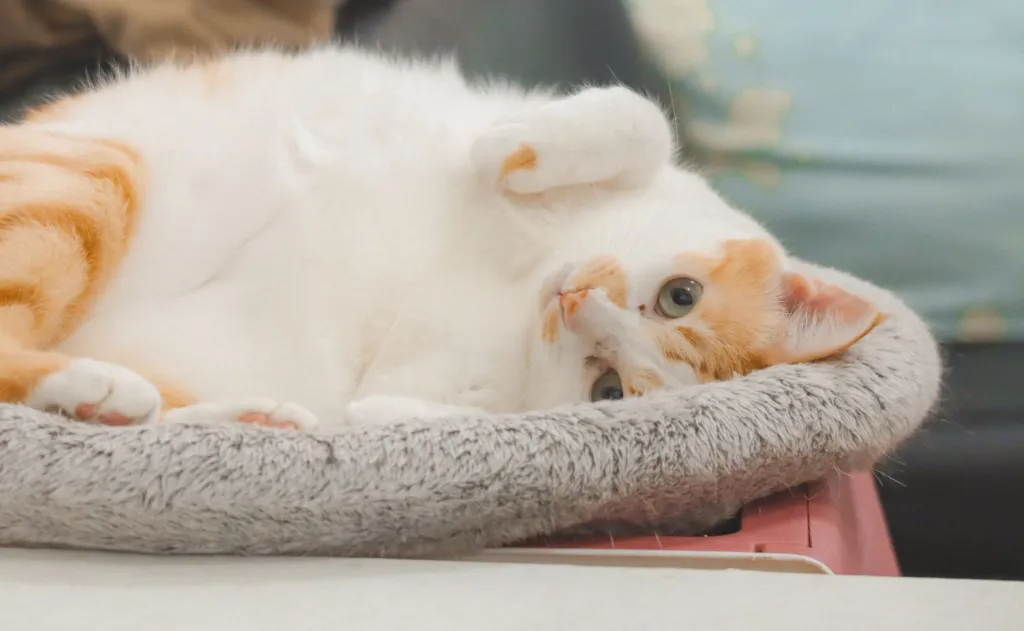
A cat rolling onto its back and showing its belly is displaying enormous trust, because the belly is its most vulnerable area. However, this is often not an invitation to rub the belly. Many cats will grab and bite if you touch there. Enjoy the compliment and offer a chin scratch instead.
Crouched and Tense
A cat crouched low with the tail tucked, head down and body tense is feeling fearful or unwell. Give them space and a way to escape or hide.
Arched Back With Puffed Fur
The classic “Halloween cat” posture, often sideways with fur standing on end, signals a frightened cat trying to look larger and more intimidating. Do not approach.
The Play Stance
A playful cat may crouch, wiggle its hindquarters and then pounce, or bound sideways with an arched back in a lighter, bouncier way than a fearful cat. Kittens do this often.
Common Cat Behaviors Explained
Kneading
Rhythmically pushing the front paws in and out, sometimes called “making biscuits,” is thought to originate in kittenhood, when kittens knead their mother to stimulate milk flow. Adult cats knead when they are content and comfortable, often on soft blankets or their favorite person. Kneading also leaves scent from glands in the paws, marking you as theirs.
Head Bunting and Rubbing
When your cat bumps their head against you or rubs their cheeks on your legs or furniture, they are depositing scent from facial glands. This is a sign of affection and belonging, a way of saying you are part of their social group.
Grooming You
Cats who like each other groom one another, a behavior called allogrooming. If your cat licks your hand or hair, they are treating you as a trusted companion.
Bringing You “Gifts”
Indoor-outdoor cats may bring home prey. This is natural hunting behavior; theories suggest cats bring prey to a safe place to eat or share it with their social group. Scolding will not help. Keeping cats indoors, or using bells and supervised outdoor time, reduces wildlife hunting.
Tail Quivering
An upright tail that quivers can mean excitement, particularly when greeting you. However, a quivering tail while backing up to a vertical surface may indicate urine spraying.
Hiding
Hiding is a normal coping behavior when cats feel stressed. Always provide hiding spots. However, a cat that suddenly hides much more than usual may be unwell and should be seen by a vet.
Cat Vocalizations
Cats use a range of sounds, and interestingly adult cats meow mostly to communicate with humans rather than with each other.
- Meow: A general request or greeting. Cats often develop specific meows to ask for food, attention or doors to be opened.
- Purr: Usually contentment, but cats also purr when stressed, in pain or unwell, possibly as a self-soothing mechanism. Look at the whole body.
- Trill or chirrup: A friendly greeting, often used by mother cats to call kittens.
- Chattering: The fast teeth chattering sound cats make while watching birds, likely reflecting excitement or frustration.
- Hiss and spit: A defensive warning. The cat is scared and asking you to back off.
- Growl: A clear warning of fear or aggression.
- Yowl: Long, loud calls can signal mating behavior in unneutered cats, territorial disputes, distress, pain or cognitive changes in older cats.
Recognizing Overstimulation During Petting
Many cats enjoy petting only up to a point, then suddenly bite or swat. This “petting-induced aggression” is common, and the warning signs are usually there:
- Tail starts twitching, then swishing
- Skin ripples along the back
- Ears rotate sideways or back
- Cat turns their head toward your hand
- Body stiffens or purring stops
Stop petting at the first sign. Keep sessions short, focus on the cheeks, chin and base of the ears, where most cats prefer contact, and let the cat ask for more by nudging your hand. A useful trick is the “consent test”: stop petting after a few seconds. If your cat pushes against your hand, continue. If they stay still or move away, they have had enough.

Signs of Pain and Illness in Cats
Cats instinctively hide pain, so subtle changes matter. Veterinary researchers have developed a Feline Grimace Scale based on facial expressions linked to pain, including ears pulled apart and flattened, squinted eyes, a tense muzzle, whiskers pulled straight and a lowered head. Other signs include:
- Hiding more or seeking less contact
- Reduced grooming, or overgrooming a specific area
- A hunched posture
- Reluctance to jump, climb or play
- Changes in appetite, litter box habits or sleep
- Uncharacteristic irritability when touched
If you notice these signs, especially several together, schedule a vet visit.
Reading Body Language Between Cats
If you share your home with more than one cat, learning how they communicate with each other helps you spot friendships and tension early. Cats are not pack animals in the way dogs are, but many form close bonds with housemates.
Signs of a Bonded Pair
- Sleeping curled up together or in physical contact
- Grooming each other, especially around the head and neck
- Greeting each other with upright tails and nose touches
- Rubbing against each other as they pass
- Playing in a relaxed way with frequent role reversals, where each cat takes turns chasing
Signs of Hidden Conflict
Tension between cats is often quiet rather than dramatic, so it is easy to miss. Watch for:
- One cat staring at another, who then leaves the room
- Blocking doorways, hallways, food bowls or litter boxes
- A cat who spends most of their time hiding or on high perches
- Chasing that is always one-directional
- Hissing, growling or swatting when passing each other
- New litter box problems, overgrooming or changes in appetite in one cat
If you see these signs, add more resources in separate areas, such as extra food stations, water bowls, litter boxes, beds and vertical spaces, so no cat has to compete. Short, structured play sessions with each cat individually also reduce frustration. For persistent problems, a feline behavior professional can help you create a reintroduction plan.
Using Body Language to Build Trust
You can communicate with your cat in their own language, too. Try these simple habits:
- Offer a finger to sniff: Extend a relaxed finger at nose height, just like a cat touching noses in greeting. Let your cat sniff and choose whether to rub against it.
- Slow-blink often: Soft, slow blinks across the room tell your cat you are not a threat.
- Let them approach: Cats feel most secure when they are in control. Sit quietly and let them come to you.
- Keep your voice soft: Calm, gentle tones are reassuring, while loud voices and sudden movements are stressful.
- Respect “no”: When your cat moves away, flicks the tail or turns their head, give them space. Respecting these signals makes them more willing to seek you out next time.
Putting It All Together
No single signal tells the full story. A purring cat with flattened ears and a lashing tail is not relaxed, and a cat with dilated pupils might be playful or frightened. Always look at the whole picture: tail, ears, eyes, whiskers, posture, vocalizations and the situation. Over time, you will learn your cat’s personal quirks, which is the most valuable knowledge of all.
Frequently Asked Questions
Why does my cat stare at me?
A soft stare with slow blinks is affectionate. Cats may also stare to get your attention, especially around mealtimes. A hard, unblinking stare with a tense body is different and may signal discomfort.
Why does my cat show me their belly then attack?
Showing the belly signals trust, not a request for belly rubs. Touching that sensitive area can trigger a defensive reflex. Stick to the head and cheeks.
Do cats purr only when happy?
No. Cats also purr when anxious, in pain or unwell. Check other body language to interpret the purr correctly.
Why does my cat follow me to the bathroom?
Cats are curious, like routines and often dislike closed doors. Following you around is usually a sign they enjoy your company.
The Bottom Line
Your cat is always talking; you just need to learn the vocabulary. Watch the tail, ears, eyes and posture, respect signals asking for space, and celebrate the slow blinks and head bumps that say “I trust you.” The more fluently you read your cat’s body language, the stronger and happier your bond will become.
Was this article helpful?

The Mad4Pets editorial team is a group of lifelong pet owners and writers who turn trusted veterinary guidance into practical, easy-to-follow advice for everyday pet parents.